
Just Because It Worked… Doesn’t Mean It Was Right: Good Outcomes + Bad Process = Harm

- This event has passed.
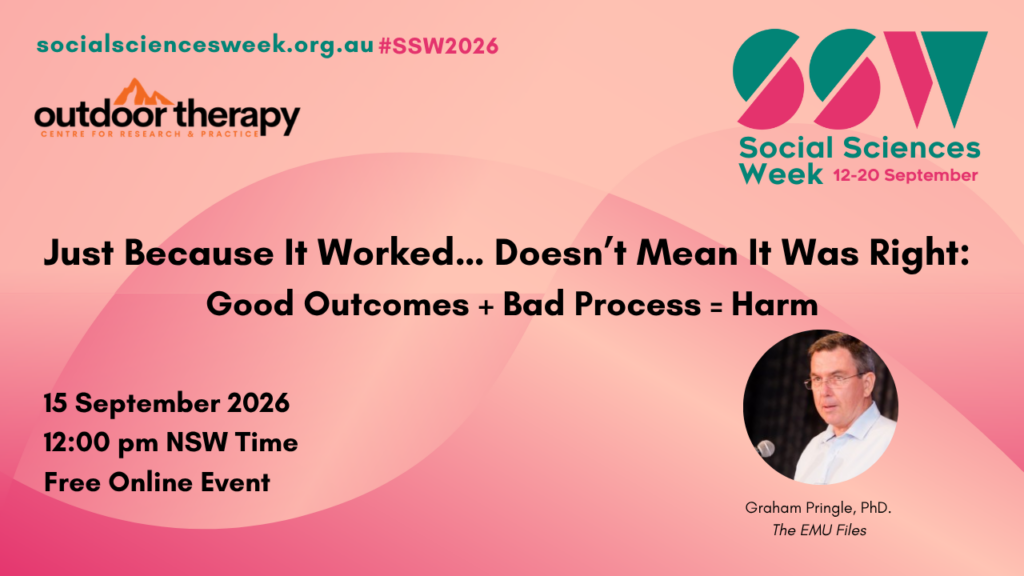
If a young person returns more compliant, polite or settled, has the intervention genuinely helped, or simply produced obedience? This webinar introduces an ecological model of psychological development to examine why good outcomes do not necessarily indicate good practice. Revisiting critiques of coercive wilderness therapy, Australian boot camps and related interventions, we examine how lasting wellbeing develops through experiences that strengthen agency, relationships and a healthy sense of self, while the opposite happens if we seek compliance. The session explores the ethical and practical implications for adventure therapy and the wider helping professions, asking whether we have sometimes mistaken behavioural change for psychological healing. “It worked” has never been enough to justify what we do with the intention of healing. Lobotomies worked too, if calm patients was all you wanted. This presentation should help look for and eliminate potential harms in our interventions.
About the Presenter: Dr Graham Pringle (PhD Griffith University 2024) has experience in Residential and Foster Care, Outdoor Education, Adventure-Based Youth Work and Adult Training. He is a director of the International Society for the Study or Trauma and Dissociation, Outdoors Queensland, and Youth Flourish Outdoors, a friend of Outdoor Therapy Centre for Research and Practice and a casual academic with Charles Sturt University. Graham has studied widely and holds postgraduate and undergraduate qualifications in adventure-based youth work, child and family interventions, teaching and psychology. He is currently studying for a Master of Social Work degree. Graham has spent over 20 years pursuing adventure as therapy for adolescents. He and his wife live in Queensland and enjoy camping. His favourite outdoor pursuits are bushwalking and canoeing.